What Is an AI Agent, in Plain English?
By Chatday Editorial Team ·
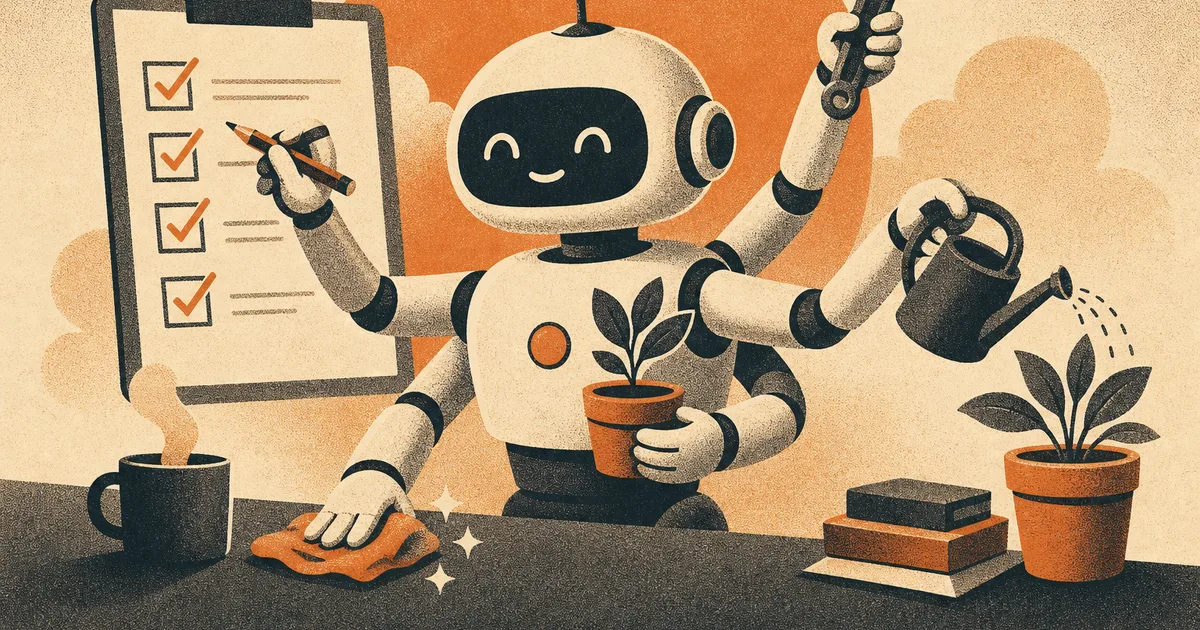
You have probably heard the phrase “AI agent” a hundred times this year, usually said as if you already know what it means. If you have been nodding along while quietly wondering what the difference is between an “agent” and the chatbot you already use, this one is for you.
The short version: a chatbot talks, an agent does. That single shift, from answering your question to actually going and completing a task, is the whole idea. Let’s unpack it without the jargon.
Chatbot vs agent: the real difference
A regular chatbot is like a very smart friend on the phone. You ask something, it gives you a great answer, and then it waits for your next message. All the doing is still on you.
An agent is that same smart friend, except you have handed them your to-do list and said “take care of this.” Instead of just telling you the five steps to plan a dinner, an agent can attempt to actually carry them out: search for recipes, build the shopping list, draft the invites, and come back when it hits something only you can decide.
The leap is from advice to action. That is why the tech world is so excited, and also why it is trickier to get right.
How an AI agent actually works
Under the hood it is less mysterious than it sounds. Give an agent a goal and it roughly does this:
- Breaks the goal into steps. “Plan my week” becomes check the calendar, list priorities, slot tasks into free time.
- Uses tools. Unlike a plain chatbot, an agent can reach for things: a web search, a calculator, a document, an app. The tools are its hands.
- Works step by step and checks itself. It does one thing, looks at the result, and decides what to do next, adjusting if something goes wrong.
- Comes back to you when it is stuck or needs a decision only you should make.
That ability to pause and reason between steps is closely tied to why modern AI now “thinks” before it answers. An agent is basically that thinking, applied over and over across a whole task.
What people actually use agents for
This is where it stops being abstract. The everyday jobs agents are being pointed at:
- Research that takes hours: “compare these ten products and tell me the best value,” done across many pages instead of one.
- Inbox and admin: sorting messages, drafting replies, flagging what needs you.
- Coding: writing, testing and fixing code across multiple files, not just one snippet.
- Multi-step planning: trips, events, projects, where each step depends on the last.
The pattern is always the same: tasks with several steps that used to eat your afternoon.
Chatbot or agent: which do you actually need?
Most people do not need a full agent for most things. Here is the honest breakdown.
| Chatbot | AI agent | |
|---|---|---|
| What it does | Answers, drafts, explains | Takes actions to finish a task |
| You stay in control by | Reading and using its reply | Reviewing its steps and approving |
| Best for | Quick questions, writing, ideas | Long, multi-step jobs |
| Main risk | A wrong answer | A wrong action, done for you |
| Effort from you | You do the doing | You supervise the doing |
For the vast majority of daily tasks, a good chat with a capable model is faster and safer. Agents earn their keep on the big, tedious, many-step jobs.
Where AI agents fall short (the honest part)
Agents are genuinely impressive, but this is early technology and it shows. Because an agent takes actions, its mistakes cost more than a chatbot’s. A chatbot giving a wrong answer is annoying; an agent taking a wrong action on your behalf is a bigger deal.
They can also get stuck in loops, misread a step, or confidently do the wrong thing without noticing. That is exactly why the sensible setups keep a human in the loop, approving anything that really matters, like spending money or sending something you cannot unsend. Treat an agent like a capable intern: great at legwork, still needs checking.
Try the engine yourself
Here is the practical takeaway. You do not need to wait for some special “agent app” to feel what this technology can do. The same leading models that power today’s agents are the ones you can chat with right now, and getting comfortable prompting them is the best way to understand where all of this is heading. If you want to see how the top models differ, put them side by side in the model comparator.
Bottom line
An AI agent is not magic and it is not a different species of AI. It is a capable model given a goal, some tools, and permission to take steps toward finishing it. That makes it powerful for the big, multi-step chores, and something to supervise rather than blindly trust. The best way to build intuition for all of it is to spend time with the models themselves.