Why your AI now thinks before it answers
By Chatday Editorial Team ·
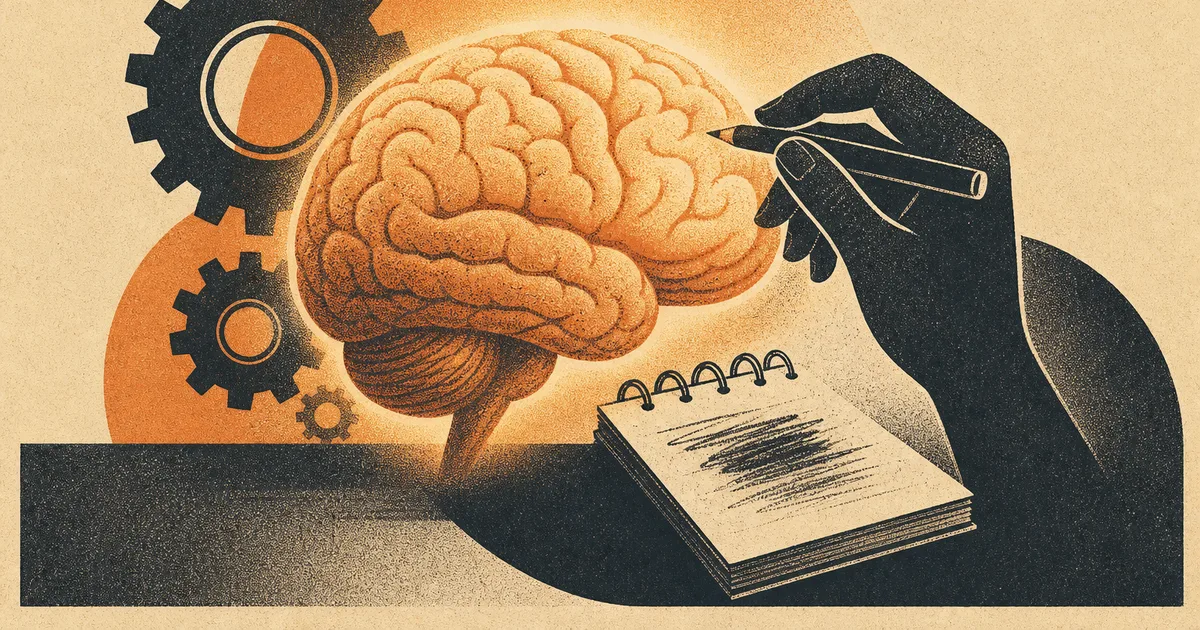
Have you noticed your AI chatbot sometimes pausing for a few seconds (maybe even showing a little “thinking…” note) before it answers? That pause isn’t lag. It’s the AI actually reasoning through your question, step by step, before it says a word. And it’s one of the biggest reasons AI got dramatically smarter over the last year.
The old way vs. the new way
Until recently, chatbots worked a bit like a student firing off the first answer that pops into their head, fast, confident, and sometimes wrong. They generated words one after another with no real “pause to plan.”
The new generation does something closer to what a careful person does: it thinks first, scribbles out its working on a mental scratchpad, double-checks itself, and then gives you the answer. That simple shift (think before you speak) turns out to make a huge difference on anything that needs real problem-solving.
So what is a “reasoning model,” really?
It’s an AI that runs a private deliberation step before showing you its reply. Picture it muttering to itself: “Okay, the question is asking X. Let me break it into steps. Step one… wait, that’s wrong, let me redo it… right, so the answer is Y.” You usually only see the polished final answer (some models let you peek at the thinking; others keep it hidden), but that behind-the-scenes work is where the magic happens.
The clever part is how they learned to do it. Instead of being told the rules, these models were trained by trial and error (rewarded every time their step-by-step thinking led to a correct answer) until “think it through” became a habit.
How it started: a quick timeline
This went from experimental to everywhere in barely a year.
| When | What happened |
|---|---|
| Sept 2024 | OpenAI’s o1 became the first big model trained to think step by step |
| Early 2025 | DeepSeek-R1 did the same (openly and far cheaper) and stunned the industry |
| 2025–2026 | Claude, Gemini and others added their own “thinking” modes |
| Now | Most top models can reason on demand; it’s becoming the default for hard tasks |
When the thinking is worth it (and when it isn’t)
More thinking isn’t always better. It costs more and takes longer, so for everyday questions it’s like hiring a detective to find your house keys. A rough guide:
| Great for thinking mode | Skip it for |
|---|---|
| Maths and logic puzzles | ”What’s a synonym for happy?” |
| Debugging or writing code | Quick definitions |
| Planning multi-step tasks | Casual chit-chat |
| Analysing a tricky decision | Simple rewrites |
A handy rule of thumb the experts use: only a fraction of questions (maybe 1 in 5) genuinely need the deep-thinking treatment. The rest are faster (and cheaper) without it.
Which AI does the thinking?
Most of the big names now offer some flavour of it: GPT-5.5, Claude and Gemini all have a reasoning mode, and open models like DeepSeek do too. They differ in style (some show you the full chain of thought, some hide it, some let you set a “thinking budget”), but the idea is the same.
Curious which one reasons best for your kind of question? The easiest way is to put them head to head:
Or just ask each one something hard and watch how it works:
Does this mean AI stopped making mistakes?
No, and that’s worth being honest about. Thinking models are more accurate, not perfect. They can still go wrong, and oddly, making them think too long can sometimes hurt the answer. Treat the reasoning as a smart assistant’s first draft, not gospel, especially for anything important.
The bottom line
“Thinking before answering” sounds almost too simple, but it’s quietly the upgrade that made today’s AI genuinely useful for hard problems. The best part: you don’t need to understand any of the machinery to benefit. You just ask, and the AI does the reasoning for you.
Want to see it in action? Ask a tricky question and watch a model reason it out, then switch to another and compare. You can do exactly that, free, in Chatday, where GPT-5.5, Claude, Gemini and more live in one place.