AI chatbot vs AI tools: which to use
By Chatday Editorial Team ·
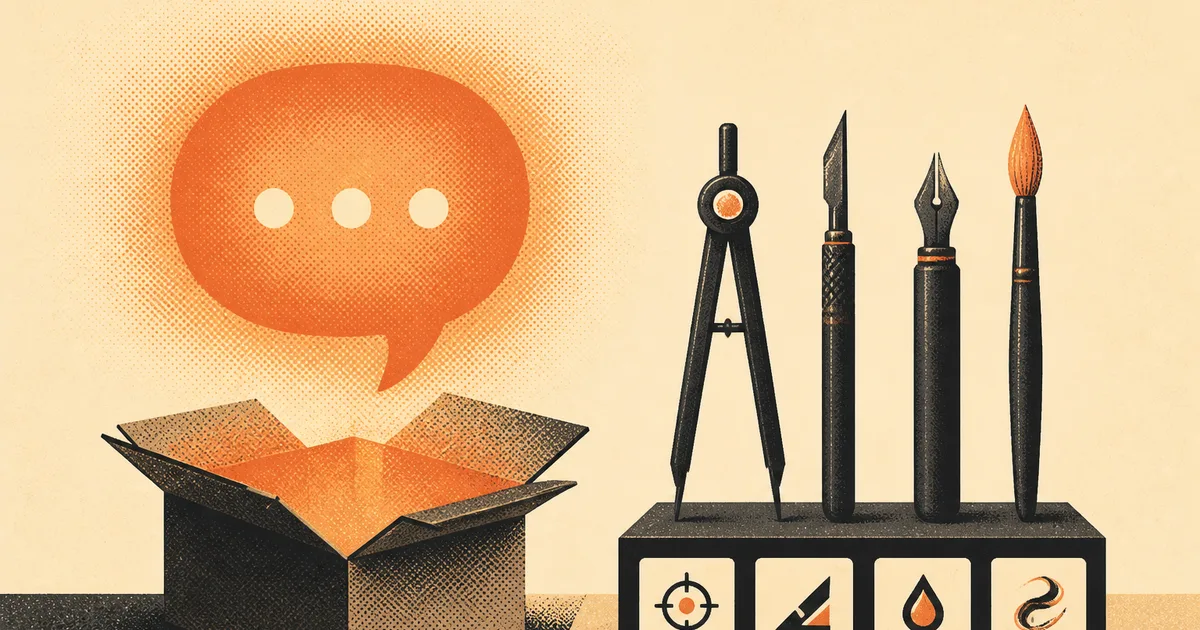
Most people do everything in a chatbot. You open a chat box, type what you want, and read the reply. It works for almost any question, which is exactly why it feels like the only option.
But a chatbot is not always the fastest way to get a job done. For common tasks like summarizing a long document, fixing your grammar, or pulling answers out of a PDF, a tool built for that one job often gives you a better result with less effort. This guide explains the difference and when to pick each one.
What a chatbot is good at
A chatbot is a single box that can handle almost any request. You can ask a question, then follow up, then change direction, all in the same conversation. That flexibility is the main strength.
Use a chatbot when:
- The task is open-ended or you are still figuring out what you want.
- You need a back-and-forth, like planning something step by step.
- The job mixes several things at once, such as explaining an idea and then rewriting it.
The trade-off is that you have to describe the job every time. If your prompt is vague, the answer is vague, and you often spend a few messages guiding it to what you actually meant.
What an AI tool is good at
An AI tool is built for one job. Instead of a blank box, it gives you a clear input and a clear result. You do not write instructions, because the instructions are already built in.
A few examples of common tools:
- A summarize tool turns a long text into a short version.
- A grammar tool fixes spelling and clarity in one pass.
- An AI humanizer rewrites stiff, robotic text so it reads like a person.
- A chat-with-PDF tool lets you ask a document questions.
Use a tool when the job is clear and you do it often. You skip the prompt writing, and the result is more consistent because the setup is the same every time.
Chatbot vs tool, side by side
| AI chatbot | AI tool | |
|---|---|---|
| Setup | Blank box, you write the request | Built for one job, no prompt needed |
| Best for | Open-ended or changing tasks | Clear, repeat tasks |
| Speed for a set job | Slower, you describe it each time | Faster, one step |
| Result consistency | Varies with your prompt | More predictable |
| Flexibility | Very high | Focused on one thing |
The short version: a chatbot is the widest option, and a tool is the fastest option for a specific job. Neither is better in general. They are better at different things.
A simple way to decide
Ask yourself one question: do I know exactly what I want, and will I do this again?
- If yes, use a tool. Summarizing reports, fixing writing, or reading PDFs are all clear, repeat jobs. A tool gets you there in one step. We cover one of these in detail in how to summarize anything with AI.
- If no, use a chatbot. When the task is fuzzy or keeps changing, the open box is the right place to work it out.
For example, if you just want to make a first draft sound less robotic, running it through a humanizer is faster than explaining the change to a chatbot. If you are still deciding what the draft should even say, the chatbot is the better start.
Where it falls short
Tools are not always the answer. A tool only covers the job it was built for, so if your task does not match any tool, the chatbot is your fallback. Tools also give you less room to steer the result. If you want a very specific style or a long back-and-forth, the chatbot handles that better.
And in both cases, the AI can still get things wrong. Read the summary, check the rewrite, and confirm anything that matters before you rely on it.
You do not have to pick just one
The real problem for most people is not chatbot versus tool. It is having them scattered across different apps and logins. One app for chat, another for grammar, a third for PDFs. That is how you end up paying for and juggling several subscriptions, a headache we wrote about in too many AI apps.
The simpler setup is one place that has both: a chatbot with the main models, plus a set of tools for the common jobs. You use the chatbot when the task is open, and switch to a tool when the job is clear, without opening anything new.
The bottom line
A chatbot and an AI tool solve the same problems in different ways. The chatbot is the flexible option for open or changing tasks. A tool is the fast option for clear, repeat jobs like summarizing, fixing text, or reading a PDF.
The easiest choice is not to choose at all. Keep both in one place, use the chatbot when the task is open, and reach for a tool when you know exactly what you want.